The boxes are unpacked. The beds are set up. Now there’s the car in the driveway with out-of-state plates.
New Hampshire gives new residents 60 days to register their vehicles. The process works differently than in most states. You don’t start at the DMV. You start at your town or city clerk’s office.
We’ve been helping families settle into New Hampshire since 1991 from our home base in Merrimack. Here’s what you need to know to get your car registered without a second trip.
The Short Version
- Deadline: 60 days after you move to New Hampshire.
- Where to start: Your local town or city clerk, not the DMV.
- What to bring: ID, two proofs of NH residency, your original out-of-state title (or lienholder info), and payment.
- What you pay: A town permit fee based on your car’s original sticker price, plus a state registration fee based on weight.
- Don’t forget: Your NH driver’s license has the same 60-day window.
How Long Do You Have to Register Your Car in NH?
You have 60 days from the time you move into the state. That deadline comes from NH RSA 261:45 and RSA 263:35, and it covers both your vehicle registration and your driver’s license.
Don’t wait until day 59. If a bank or leasing company holds your title, the paperwork alone can take weeks. More on that below.
Where Do You Register a Car in New Hampshire?
Registration happens in two parts:
- The town (municipal) portion. You pay this at the clerk’s office in the town or city where you live.
- The state portion. This is the state registration fee, and it’s where you get your plates.
Many NH town clerks act as agents for the state, so you can handle both parts and leave with plates in one visit. In Merrimack, for example, you pay the state fee at the Town Clerk’s office and receive your plates there. If your town can’t process the state portion, you’ll finish at a DMV office.
Hours, appointment rules, and accepted payment methods vary from town to town. Call ahead or check your town’s website before you go. Whether you just landed in Nashua, Manchester, or Windham, your clerk’s office is the first stop.
What to Bring to the Town Clerk
Bring everything on this list. Missing one document is the most common reason people have to come back.
- Photo ID. A driver’s license works.
- Two proofs of NH residency. Towns accept items like a signed lease, closing documents, a utility bill showing your service address, a bank statement, a pay stub, or a NH auto insurance policy. Each town sets its own list, so confirm with yours.
- Your original out-of-state title for any vehicle from model year 2000 or newer. New Hampshire is a title state, and the clerk keeps the original. Photocopies aren’t accepted.
- For vehicles from 1999 or older: your out-of-state registration plus either the title or a completed NH VIN Verification form (TDMV 19A).
- If you have a loan: your current registration, the lienholder’s name and address, where and when you bought the car, and the current odometer reading.
- If you lease: your lease agreement and the leasing company’s name and address.
- Payment. Many clerks take cash, checks, and cards, though card payments often carry a convenience fee.
- The owner, in person. The person named on the title or registration should be there. If they can’t make it, some towns accept a notarized power of attorney.
Pro tip: Don’t pack your title in a moving box. Keep it with your other important documents in the bag that rides with you. Our packing and moving tips cover what belongs in that bag. And if you’re sorting paperwork before your move, set your title, registration, and loan papers aside before anything goes in the shred pile.
What If Your Bank Holds the Title?
This is where most delays happen.
If a lienholder or leasing company holds your title, your town clerk can’t request it. The NH Title Bureau handles that request directly with your lender. Windham’s town clerk notes this can take up to five weeks.
Once the title arrives, you’ll get a notice authorizing your registration. Bring that notice back to your clerk to finish up. Merrimack also notes you can’t renew your NH registration until your lienholder releases the title to the state.
The takeaway is simple. If you have a car loan or lease, start this process in your first week, not your last.
If your old registration or insurance is about to expire before the title shows up, ask your clerk about hardship or temporary registration options. Windham, for example, offers a hardship process for registrations or insurance expiring within 20 days.
How Much Does It Cost to Register a Car in NH?
You’ll pay two main fees, plus a title fee.
Town Permit Fee
The town portion is based on your vehicle’s original manufacturer’s list price (MSRP), not what you paid for it. The rate drops each year as the car ages:
| Vehicle Age | Rate per $1,000 of MSRP |
| Current model year | $18.00 |
| 2nd year | $15.00 |
| 3rd year | $12.00 |
| 4th year | $9.00 |
| 5th year | $6.00 |
| 6th year and older | $3.00 |
For a car with a $35,000 MSRP in its first year, that’s $630 for a full 12 months. The same car in its sixth year drops to $105.
Budget for this. On a newer vehicle, the town fee is usually the biggest part of your registration bill.
State Registration Fee
The state fee is based on your vehicle’s gross weight. New Hampshire raised these fees at the end of 2025:
| Vehicle Weight | Annual State Fee |
| Up to 3,000 lbs | $42 |
| 3,001 to 5,000 lbs | $48 |
| 5,001 to 8,000 lbs | $66 |
Title Fee
The state title fee is now $35. Some towns add a small local fee on top.
Why Your First Bill May Look Odd
NH registrations expire in your birth month. Your first registration gets prorated to line up with it, so it can run anywhere from about 5 to 16 months. That means your first bill may come in higher or lower than a standard year.
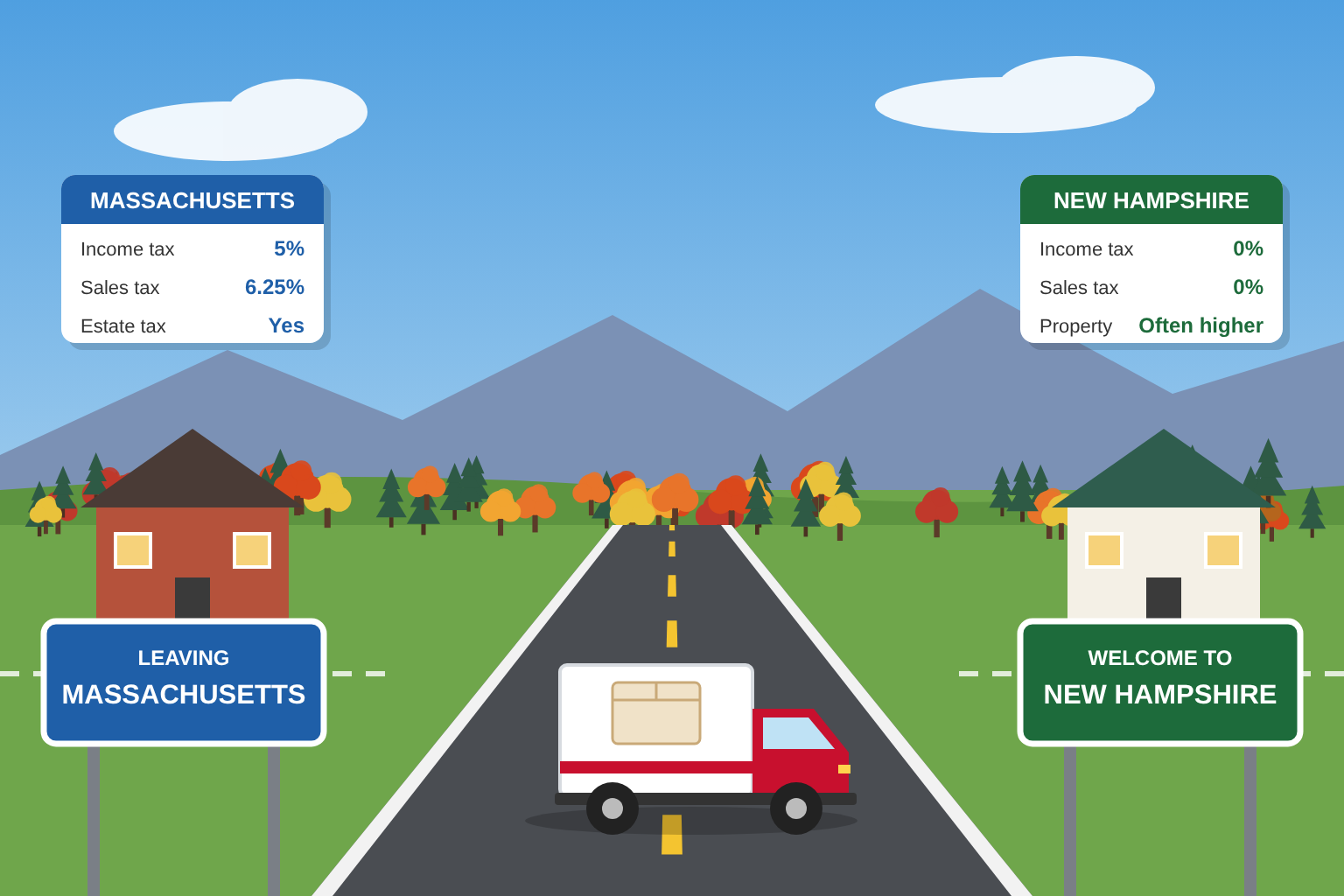
Moving from Massachusetts? New Hampshire doesn’t send you an annual excise tax bill like your old Massachusetts town did. The town permit fee covers that. You may also be eligible for a Massachusetts excise abatement once you move out, with the right documentation. Contact your former town’s assessor’s office.
Do You Need an Inspection After Registering in NH?
This one is in flux, so check before you assume.
For years, New Hampshire required a safety inspection within 10 days of registration. The Legislature voted to end the passenger vehicle inspection program effective January 31, 2026. A federal judge then ordered the state to reinstate it because of federal Clean Air Act requirements. On April 30, 2026, a federal appeals court put that order on hold, and the state says there’s no current inspection requirement while the case continues.
Because the case is still active, confirm the current rules with the NH DMV before you register. Either way, you’re still responsible for keeping your vehicle safe to drive.
Get Your NH Driver’s License Too
Your driver’s license runs on the same 60-day clock. Unlike registration, this part happens at a DMV office, by appointment.
You’ll need:
- A completed Application for Driver License or Non-Driver ID (DSMV 450)
- Proof of identity and NH residency
- The license fee
- A vision test
If you want a REAL ID, check the NH DMV’s required documents list before your appointment. It’s stricter.
Close Out Your Old State’s Registration
Once your NH plates are on the car, wrap things up with your old state.
If you’re coming from Massachusetts: You can cancel your registration online at no cost. Keep the cancellation receipt and give your insurance company a copy. Massachusetts doesn’t require you to return your plates. Once the registration is cancelled, you can recycle or destroy them.
Coming from somewhere else? Every state handles plates and cancellations differently. Check your previous state’s motor vehicle website before you toss anything.
Also call your insurance company. Update your policy to your new NH address and keep coverage active through the whole switch.
Moving to New Hampshire? We’ve Got You Covered
Registering your car is one item on a long move-in list. The move itself shouldn’t be another headache.
College Bound Movers has handled moves into New Hampshire for more than 30 years. Our New Hampshire movers are trained, on payroll, and ready for local moves and long-distance relocations alike. Need help getting boxed up? Our packing services take that off your plate. Relocating for a new job? Ask about our corporate relocation services.
Still deciding where to land? See why people are moving to New Hampshire right now.
Save time and energy and book your move with us today. Get a free estimate or call (603) 882-6683.
Frequently Asked Questions
How long do new residents have to register a car in NH?
You have 60 days after moving to New Hampshire to register your vehicle and get a NH driver’s license.
Do I register my car at the DMV or the town clerk in New Hampshire?
Start at the town or city clerk where you live. Many clerks can also collect the state fee and issue your plates. If yours can’t, you’ll finish at a DMV office.
Can I register my car in NH before getting a NH driver’s license?
In many towns, yes. Clerks typically ask for photo ID, such as a driver’s license, plus two proofs of NH residency. Call your town clerk to confirm what they accept. Both are due within 60 days either way.
What do I need to register a car in NH if I still owe money on it?
Bring your current registration, your lienholder’s name and address, your purchase date and location, and your odometer reading. The NH Title Bureau requests the title from your lender, which can take several weeks.
Do I need a title to register an older car in NH?
Vehicles from model year 1999 or older don’t need a title. You’ll need your out-of-state registration plus either the title or a completed VIN Verification form (TDMV 19A).
How much does it cost to register a car in NH?
It depends on your car’s original MSRP, age, and weight. The town fee runs $18 per $1,000 of MSRP for a current-year vehicle and drops to $3 per $1,000 by year six. The state fee runs $42 to $66 for most passenger vehicles, plus a $35 title fee.